
Cattle and small ruminants
Sma Impex works closely with the cooperative cattle improvement organization (CRV) and the Friesian Holland cattle studbook (FHRS). CRV is the largest Dutch-Flemish organization for cattle improvement and holder of the pedigree for 26 different cattle breeds, including the Holstein Friesian. Roughly around 80% of export heifers originate from members of the CRV. Thanks to the CRV, the breeding goals are updated every 5 years after thorough evaluation. This ensures long-term continuous cattle improvement. This is done by breeding with healthy and efficient herds and monitoring the current herd with farm inspections, MPR, management products, expertise, semen and embryos. This ensures that the best calves are born, delivering high milk yields and high life production. There are also multiple pedigree holders for sheep and goats. For example; Blackblaze Breeders group, Association of Special Sheep Breeds, Studbook Blue Texel, Dutch organization for goat breeding and many more.
Explore our breeds
A few cattle breeds are:
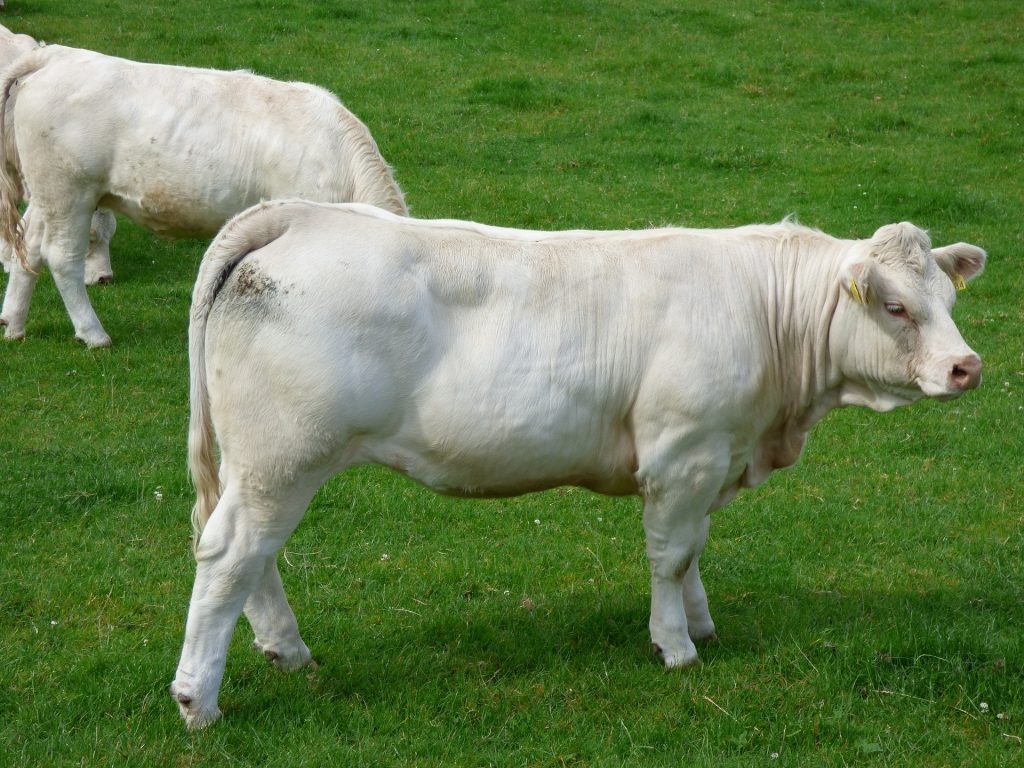
CHAROLAIS
Charolais are good for growth and uniformity
They have superior natural liveweight gain for age
Tremendous muscling and conformity
Easy to manage in terms of temperament
Ease of calving
The ability to fit into any system – grass based or intensive
Charolais delivers a distinct colour code, Charolais cross calves have dominant colour markings which provides a guarantee of their parentage
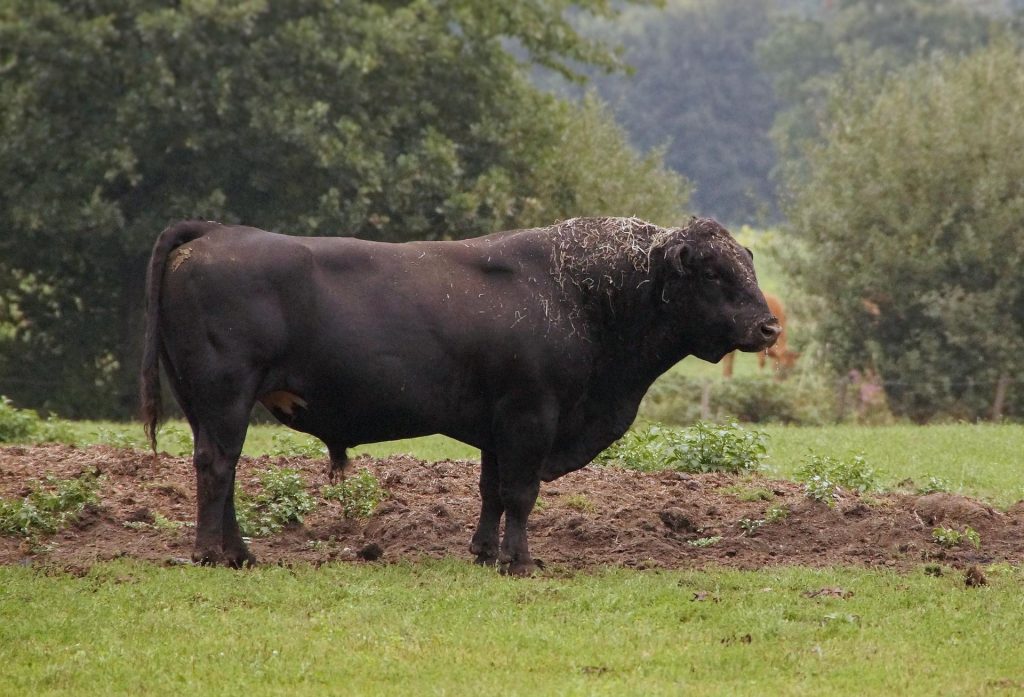
LIMOUSIN
The Limousin is large, fine and has a strong boned frame. Mature Limousin females should average 650 kilos and mature males 1000 kilos. The head is small and short with a broad forehead, and the neck is short with a broad muzzle.
Coat colour is golden-red and a lighter colour under the stomach, inside the thighs, around the eyes and muzzle, and around the anus and end of the tail. The skin is free of pigmentation.
Limousins with black genetics show a variation in colour. Calves can be light fawn or brown in colour graduating through different ages to a deep black at a fully mature age. Mature black animals can often display black coats fully tinged with brown hairs.
Horns are yellow at the base and darken towards the tips; they are at first horizontal, then curve forwards and upwards.
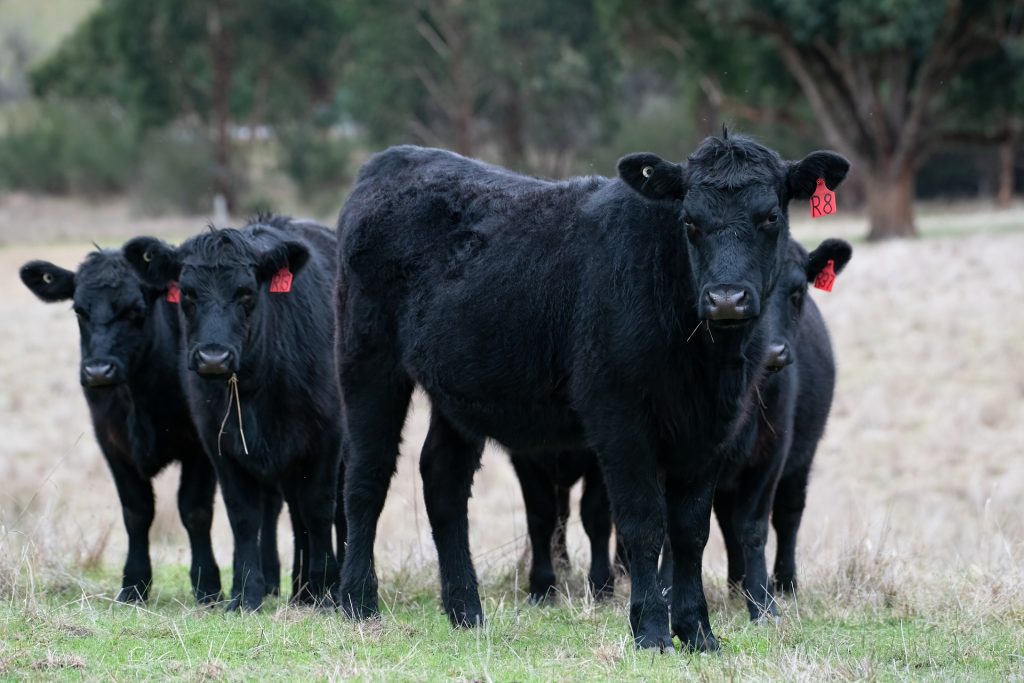
ANGUS
Medium or high degree of marbleization
“A” sophistication level
65 – 104 square centimeters of eye muscle (M. Longissimus dorsi) section.
Carcass weight less than 455 kg.
Fat thickness less than 2.5 cm (on the eye muscle)
Medium or thicker musculature
hump not exceeding 5 cm in length
Practically free from capillary ruptures
Free from black cut spots
Most of the body is black or red
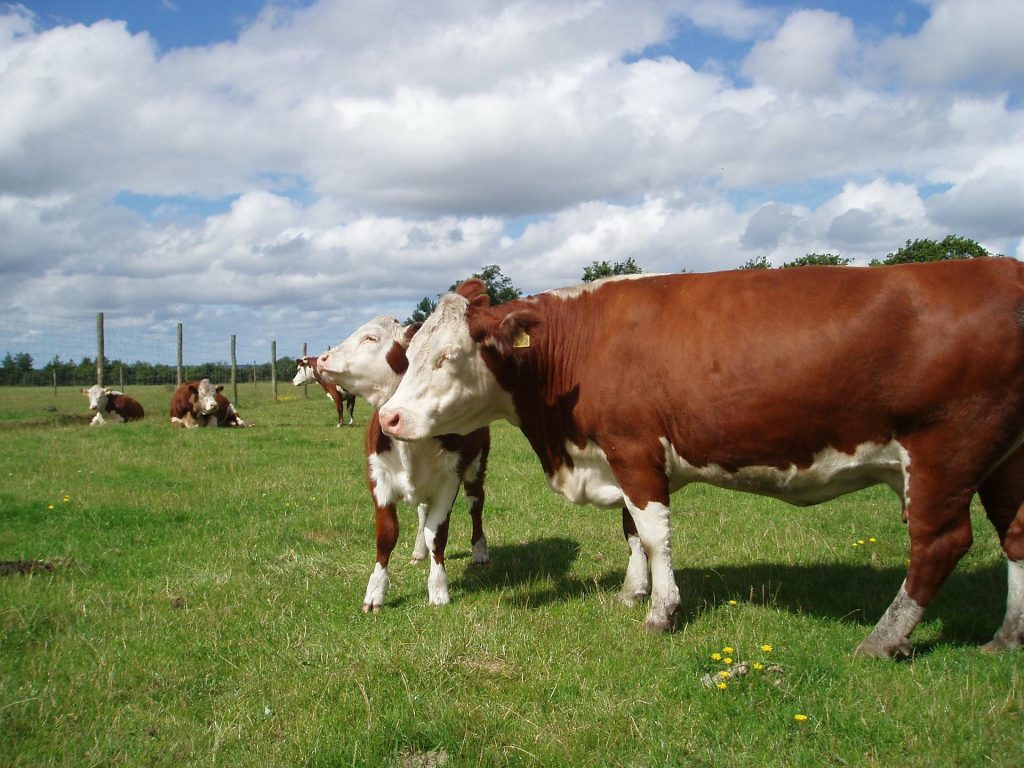
HEREFORD
Hereford cattle is a breed of beef cattle that is widely bred for meat production in many different climatic conditions.
Its origin is Herefordshire, England, United Kingdom. Today, there are more than five million purebred Hereford cattle in 50 countries. Hereford cattle were first exported from the United Kingdom to Kentucky, the United States in 1817. After America, it spread to Canada and Mexico and reached the big cattle-raising countries in South America. Today, Hereford cattle are found from Australia to the steppes of Russia, Israel, Japan, continental Europe and Scandinavia and are widely distributed around the world.
SIMMENTAL
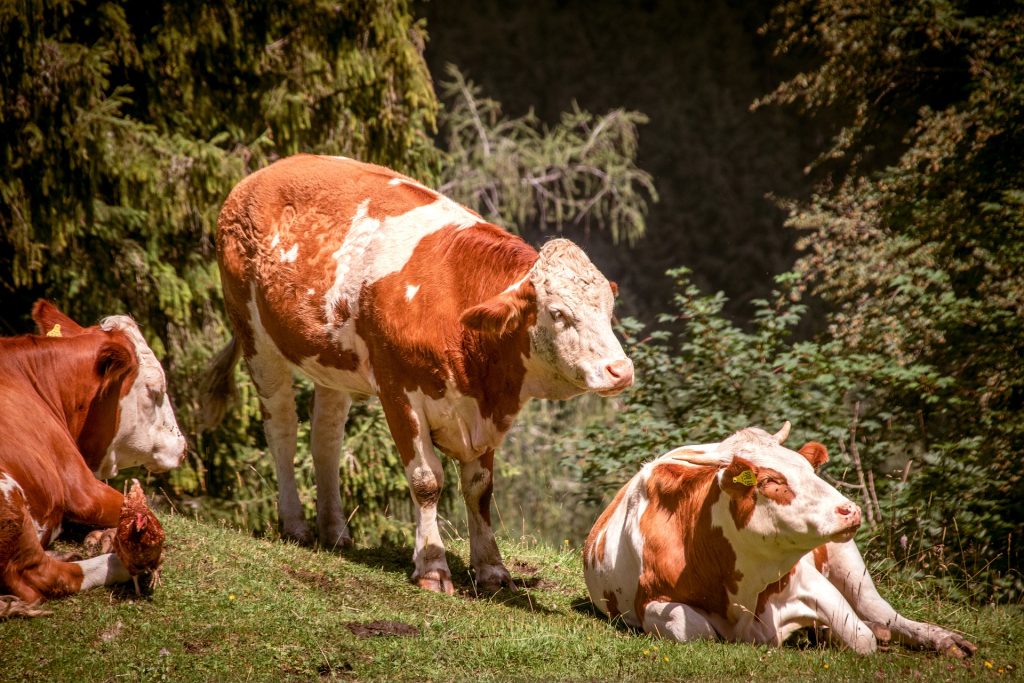
The color is yellow-white or red-white tawny.
The head, forehead and eyelashes are necessarily white.
Males and females have horns.
It adapts easily to climatic conditions.
They are long lasting.
High fertility feature
Maternal instinct is high.
There are few health problems.
Due to its many features, it is the primary choice of breeders.
FRISIAN
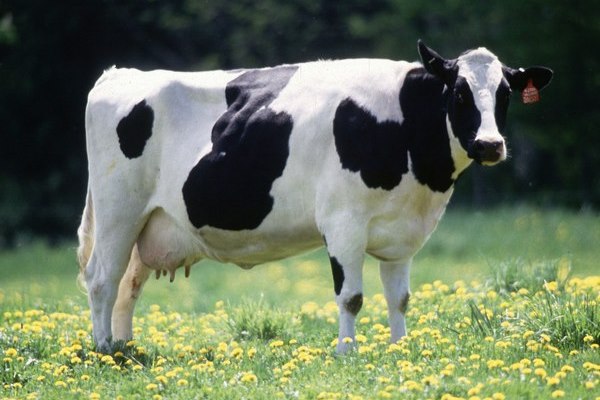
Holsteins have distinctive markings, usually black and white or red and white in colour, typically exhibiting piebald patterns. On rare occasions, some have both black and red colouring with white. Red factor causes this unique colouring. ‘Blue’ is also a known colour. This colour is produced by white hairs mixed with the black hairs giving the cow a bluish tint. This colouring is also known as ‘blue roan’ in some farm circles. They are famed for their high dairy production, averaging 22,530 pounds (10,220 kg) of milk per year. Of this milk, 858 pounds (3.7%) are butterfat and 719 pounds (3.1%) are protein.
A healthy calf weighs 40 to 50 kg (75–110 lb) or more at birth. A mature Holstein cow typically weighs 680–770 kg (1500–1700 lb), and stands 145–165 cm (58–65 in) tall at the shoulder. Holstein heifers should be bred by 11 to 14 months of age, when they weigh 317–340 kg (700–750 lb) or 55% of adult weight. Generally, breeders plan for Holstein heifers to calve for the first time between 21 and 24 months of age and 80% of adult bodyweight. The gestation period is about nine and a half months.
Explore our breeds
Cattle genetics
As stated before, the Dutch dairy cow population primarily owes its high quality to its genetic potential. Due to the high level of participation of Dutch dairy farmers in breeding activities like herd book registration, milk recording, type classification, and artificial insemination (AI). Nowhere in the world is the level of dairy farmer participation in these activities as high as in the Netherlands. As a result, AI organizations can develop and implement fine-tuned breeding programs. The most important selection criteria are milk production, fat and protein percentage, age durability, functional traits (udder, feet and legs), fertility, health, calving ease, and type. The indexes for calculating the breeding values are constantly updated according to the newest scientific insights.
Explore our breeds
A few small ruminants breeds are:
MERINOS
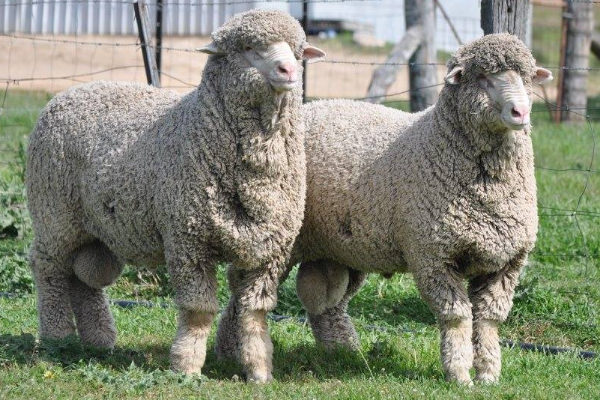
Merinos vary considerably in size, conformation, and extent of skin folds, but the prevailing trend in breeding is to develop sheep of medium size, with fair mutton conformation and a minimum of skin folds. The colour of their faces and legs is white. Although they have a considerable growth of wool on their faces, it is seldom extensive enough to cause wool blindness. The fine wool fibres of Merino fleeces are beautifully crimped. Through selective mating and crossing with other breeds, the Merino has served extensively as foundation stock in the creation of many useful breeds and strains of sheep.
CORRIEDALES
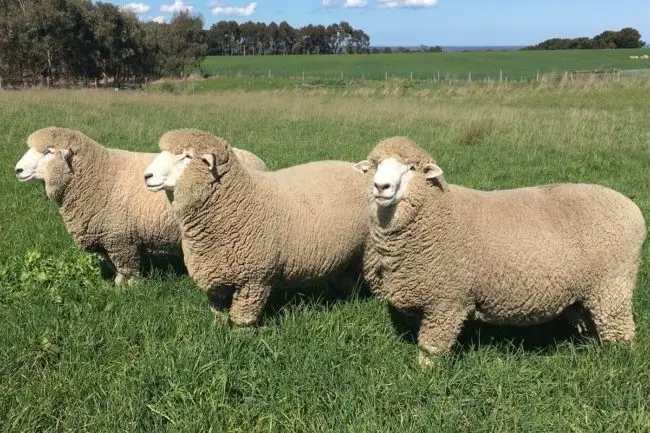
The Corriedale breed is the oldest of all the mestizo breeds, it arose from the crossing of the Merino and Lincoln breeds , developed simultaneously in Australia and New Zealand , it was brought to the United States in 1914. The breed was developed between 1868 and 1910, as a dual-purpose breed of sheep, very good for meat and wool production, the corriedale breed was gradually distributed in many of the sheep-raising areas in the world, mainly in Uruguay , Argentina and Brazil .
They have a long lifespan, it is a robust and balanced animal throughout its body, they are docile mothers, easy to care for, with high fertility rates. They are well adapted to a wide range of climatic conditions, they do not have horns.
TEXEL
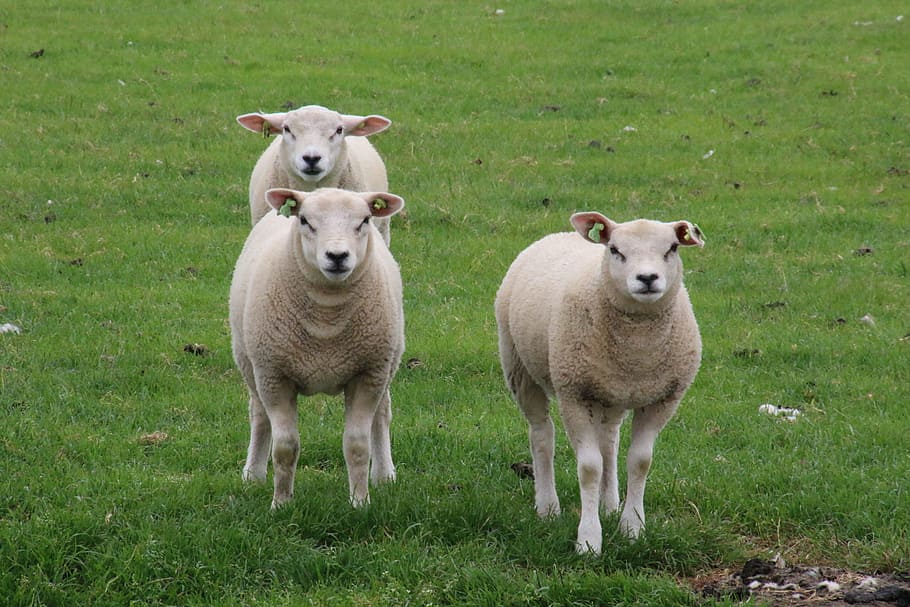
The Texel sheep originated on the island of Texel, the largest of the Wadden Islands off the north coast of the Netherlands. The exact origin of the breed is unknown although it is thought to be a cross of the original Texel sheep with multiple English breeds. It was slowly bred into a meat breed of outstanding carcass quality. It is now one of the most common meat breeds in the Netherlands, making up seventy percent of the national flock.
DORPER
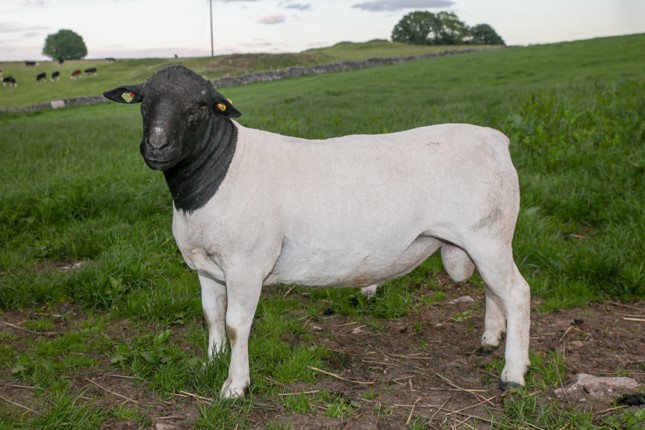
The Dorper is a South African breed of domestic sheep developed by crossing Dorset Horn and the Blackhead Persian sheep. The breed was created through the efforts of the South African Department of Agriculture to breed a meat sheep suitable to the more arid regions of the country. It is now farmed in other areas as well, and is the second most common sheep breed in South Africa.
SUFFOLK
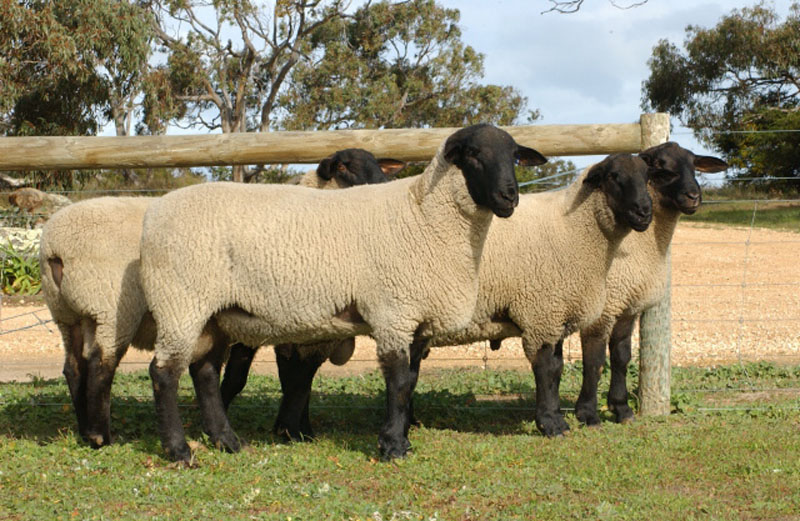
The Suffolk is a British breed of domestic sheep. It originated in the late eighteenth century in the area of Bury St. Edmunds in Suffolk, as a result of cross-breeding when Norfolk Horn ewes were put to improved Southdown rams. It is a polled, black-faced breed, and is raised primarily for its meat. It has been exported to many countries, and is among the most numerous breeds of sheep worldwide.